


E-Commerce•12 Min
Subscription Apps on Shopify: Recharge, Bold, Skio, Stay AI, or Native?

Written byRishi Thacker
Posted onJun 04, 2026


UK Shopify merchants need apps US store owners rarely think about: Royal Mail integration for domestic delivery, Klarna and Clearpay for BNPL at checkout, Sufio for UK VAT and Making Tax Digital, Zonos for post-Brexit EU shipping, and Trustpilot for the trust signal UK shoppers look for. The right 10-app stack covers shipping, payments, tax, reviews, and CRM without overlap, and most UK stores spend £200 to £400 per month on apps.
Most "best Shopify apps" lists are written from a US perspective. They push USPS rate shopping, Stripe alternatives, Afterpay (the US brand), and tax automation for state-by-state sales tax. None of that helps a UK merchant printing Royal Mail labels, offering Klarna Pay in 3, or filing a quarterly VAT return through Making Tax Digital.
This is a UK-specific shortlist of the 10 apps we recommend to Shopify merchants selling primarily in Britain. It covers domestic shipping with Royal Mail and Evri, post-Brexit fulfilment into the EU, BNPL options UK shoppers actually expect, VAT and MTD compliance, and the review and loyalty platforms that move the needle in the UK market. Pricing ranges are accurate as of early 2026 but should be verified on each vendor's site before you commit.
The default Shopify app ecosystem leans American. Many top-ranked apps were built for US-centric shipping carriers, US sales tax rules, and US payment behaviour. A UK store using that stack ends up paying for capability it cannot use, missing the BNPL options UK shoppers expect, and patching together VAT compliance manually at quarter-end.
Three structural differences shape what a UK stack actually needs. First, shipping. Royal Mail is the default last-mile carrier for letters and small parcels under 2kg, and most UK shoppers expect tracked 24 or 48 delivery as standard. Evri (formerly Hermes), DPD, ParcelForce, and Yodel each have specific Shopify integration patterns. Second, tax. UK VAT is 20% standard rate, and Making Tax Digital has been mandatory for VAT-registered businesses since April 2022. Your invoicing app needs to produce VAT-compliant invoices and your tax engine needs to handle MTD-aligned reporting. Third, payments. Shop Pay Installments is US-only. UK shoppers expect Klarna and Clearpay at checkout, and B2B and subscription stores increasingly need GoCardless direct debit.
A UK-tuned stack saves money in two places: it stops paying for US-tilted features the store will never use, and it prevents the manual workarounds that eat finance team hours every quarter.
The Royal Mail Shopify app connects directly to a Royal Mail Business Account or Click & Drop. Orders flow in automatically, labels print in batches, tracking numbers sync back to the customer's order page, and you can preset packaging types and services per product. Royal Mail still dominates UK domestic shipping for parcels under 2kg, and Tracked 24 and Tracked 48 are the two services most consumer brands default to.
Why it matters for UK stores: rate-shopping apps that compare USPS Ground vs UPS rates are useless here. The Royal Mail app skips that comparison entirely and gives you the right labels for the carrier most UK shoppers actually receive their parcels from.
Pricing: $10/month. Free trial available.
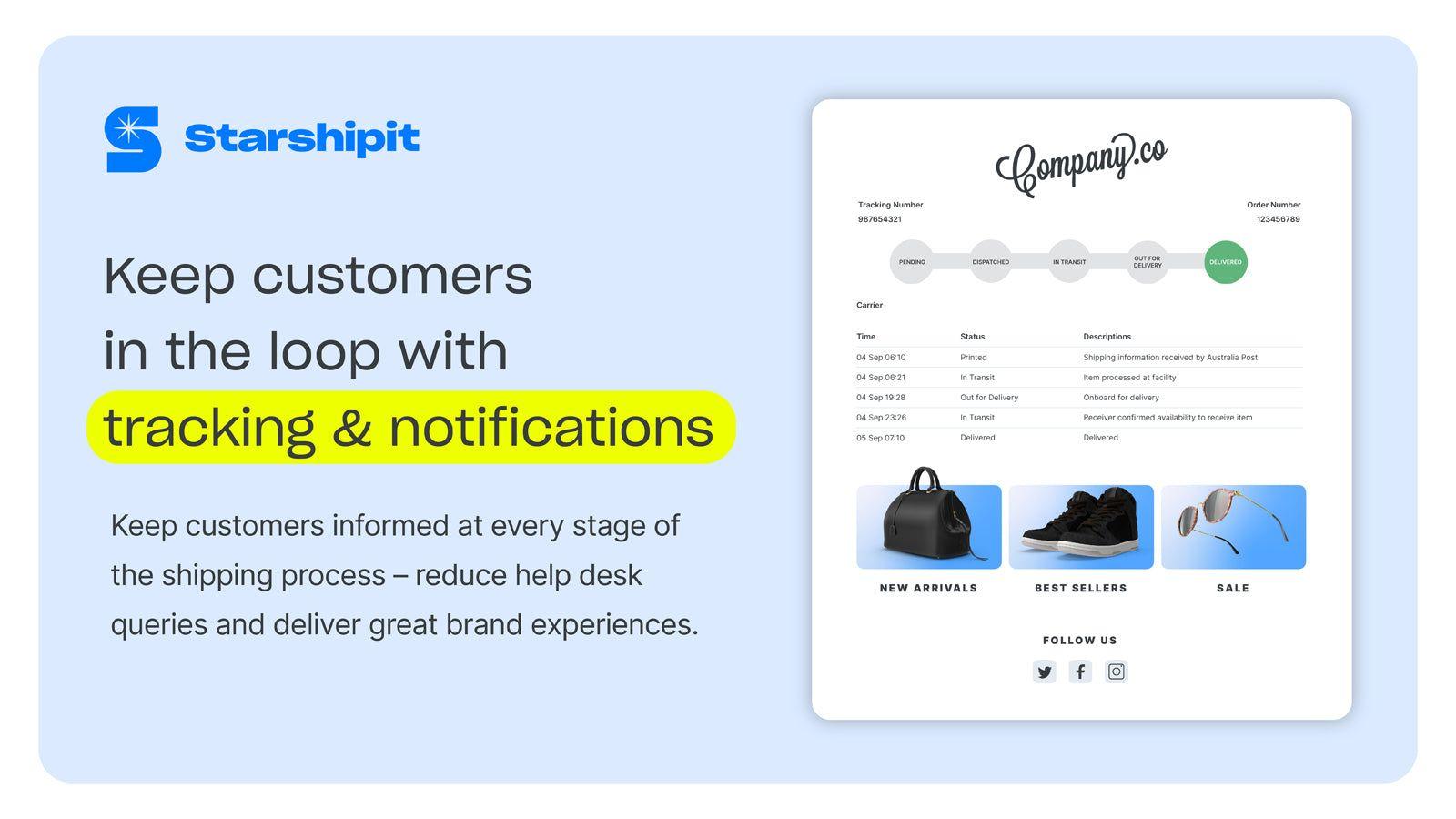
If you ship through more than one UK carrier (and most stores beyond £500K do), Starshipit handles the multi-carrier problem. It connects to Royal Mail, Evri, DPD UK, ParcelForce, Yodel, and DHL. You set shipping rules (weight, value, service, destination), and the right carrier label prints automatically. Returns labels, branded tracking pages, and email/SMS notifications come in the standard plan.
The competitor here is ShipStation. ShipStation works fine for UK merchants but its carrier coverage and rule-builder feel US-first. Starshipit is built primarily for ANZ and UK markets, and its rule logic handles UK postcode quirks (Highlands and Islands surcharges, BFPO addresses) more cleanly.
Pricing: from around £30 per month for small volumes.
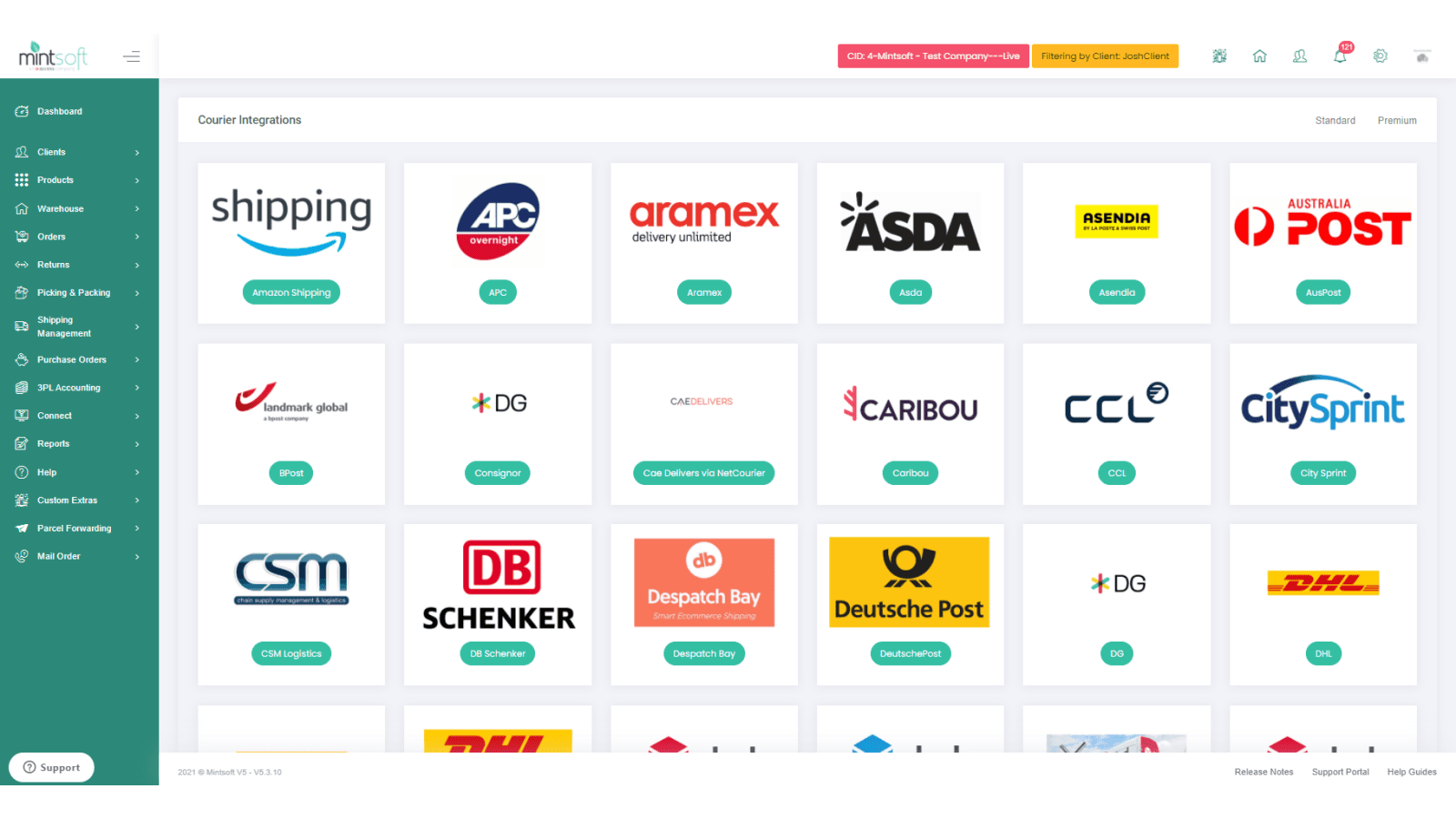
Once you outgrow garage fulfilment and move into a 3PL or your own warehouse, Mintsoft handles the warehouse-management layer between Shopify and the carriers. It supports multi-warehouse stock allocation, pick lists, batch picking, returns processing, and integrates with the same UK carriers Starshipit covers. Mintsoft was acquired by Royal Mail in 2021, which makes Royal Mail integration particularly clean.
You don't need this until you're shipping more than around 100 orders per day or running multi-location inventory. Below that, the Shopify and Royal Mail apps together are enough.
Pricing: tiered by order volume, typically £200 to £600 per month. Free to install.
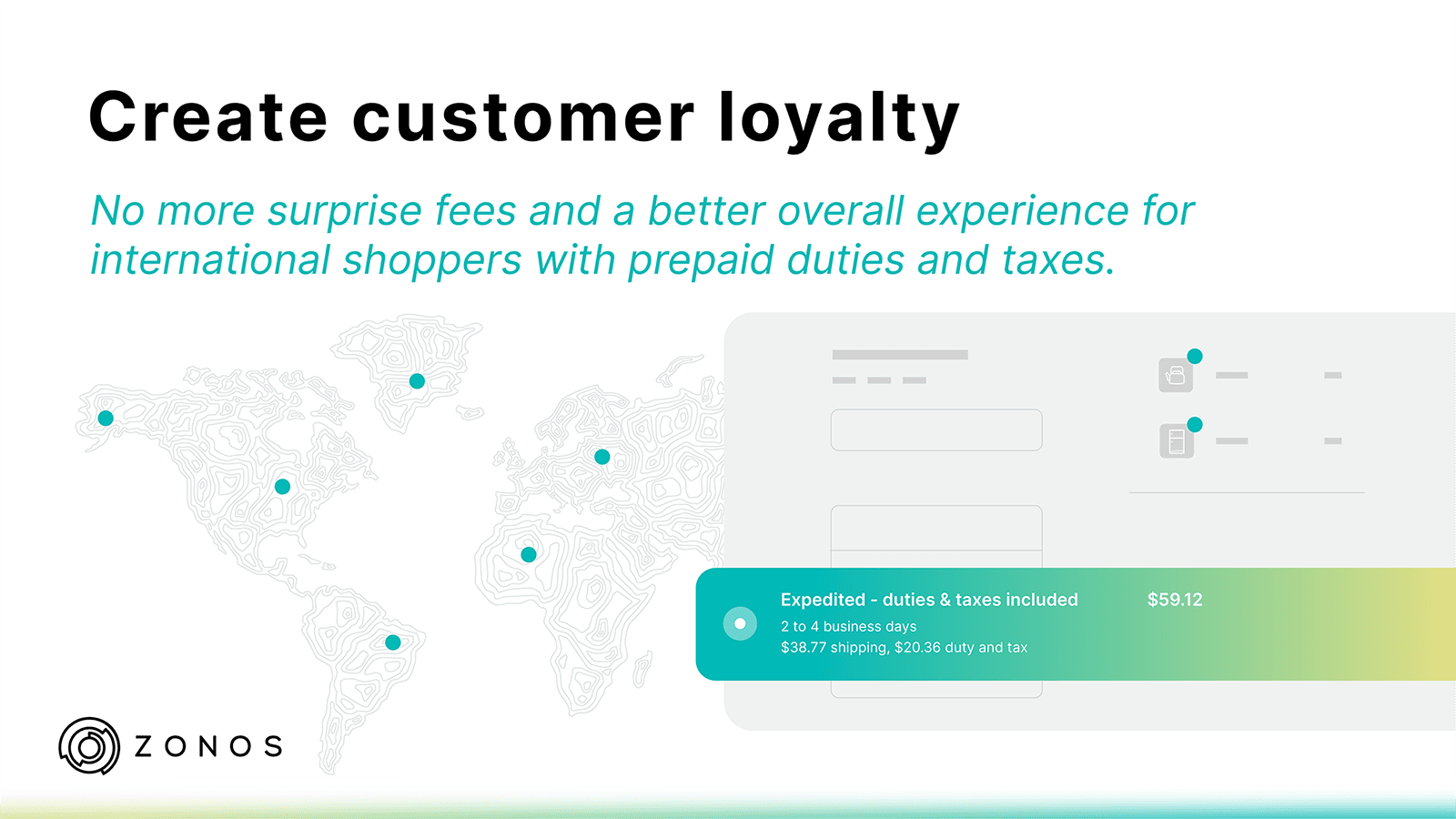
Post-Brexit, selling from a UK store into the EU means customs declarations on every parcel, HS code classification on every product, and either IOSS (Import One Stop Shop) for orders under €150 or full DDU/DDP customs handling above that threshold. Zonos calculates landed cost (product + shipping + duties + VAT) at checkout so EU shoppers don't get hit with a surprise customs bill on delivery, and it generates the right customs paperwork automatically.
Why this matters for UK stores: the alternative is either blocking EU traffic entirely (lost revenue) or shipping DDU and letting customers absorb the duty surprise (chargeback risk, bad reviews). Zonos is the cleanest mid-market answer.
Pricing: From $2,500/year. Free trial available.
If the EU isn't a meaningful market for you, skip Zonos and either restrict EU shipping or use Royal Mail's IOSS service for small EU orders. The decision turns on what percentage of your traffic is EU and what your average order value looks like. For merchants thinking more broadly about international expansion across regions, our Shopify Payments UAE early-access breakdown covers the GCC side of the same question.
BNPL share at UK checkout has settled into a clear hierarchy. Klarna leads, Clearpay (the UK brand of Afterpay) sits second, PayPal Pay in 3 is third, and Shop Pay Installments isn't available in the UK at all. If you sell at average order values above £40, offering BNPL is now expected rather than optional.

Klarna offers three UK products: Pay in 3 (interest-free, three monthly instalments), Pay in 30 (full payment 30 days after delivery), and longer financing for higher AOV purchases. The Klarna Shopify integration handles on-site messaging (the "Pay in 3 with Klarna" widget on PDPs), the checkout option, and post-purchase customer communication.
Why install it: Klarna holds roughly 35% of UK BNPL market share, and the on-site messaging widget alone lifts conversion on PDPs above £40 by 5 to 15% according to Klarna's own published case studies. Verify the lift in your own store before treating it as universal.
Pricing: no monthly fee, Klarna takes around 3.29% + £0.20 per transaction.
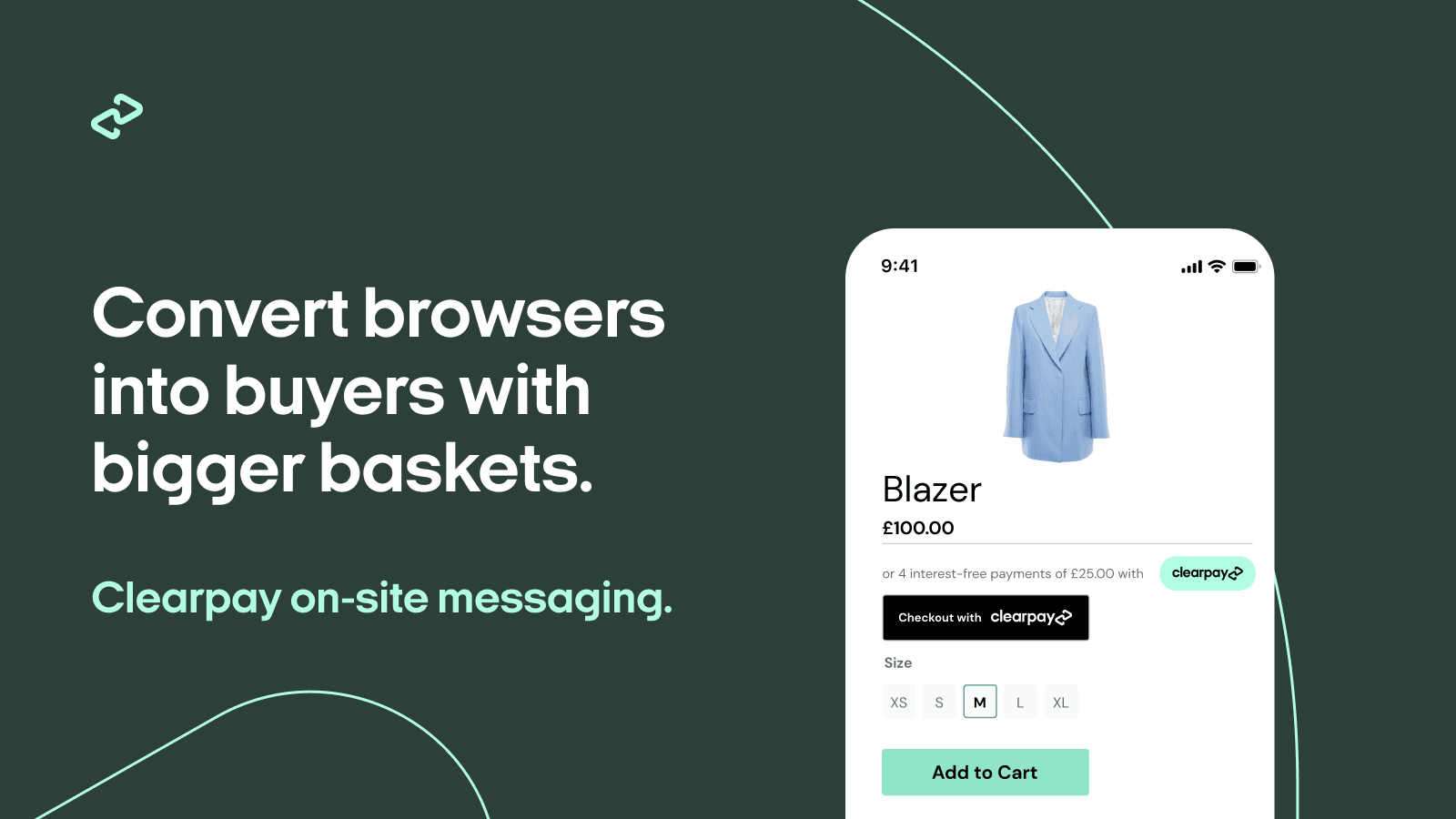
Clearpay is the UK brand of Afterpay, owned by Block (formerly Square). It offers four interest-free instalments paid over six weeks. It skews younger than Klarna and is particularly strong in fashion, beauty, and homeware AOVs between £40 and £200. Adding both Klarna and Clearpay isn't redundant: shoppers tend to have a strong preference for one or the other, and offering both captures both segments.
Pricing: no monthly fee, Clearpay takes around 4% + £0.30 per transaction.
VAT is where UK Shopify merchants quietly hemorrhage finance team hours. Shopify's native tax engine handles VAT calculation at checkout reasonably well, but it does not generate VAT-compliant invoices automatically and it does not file Making Tax Digital returns. Two apps fill that gap.
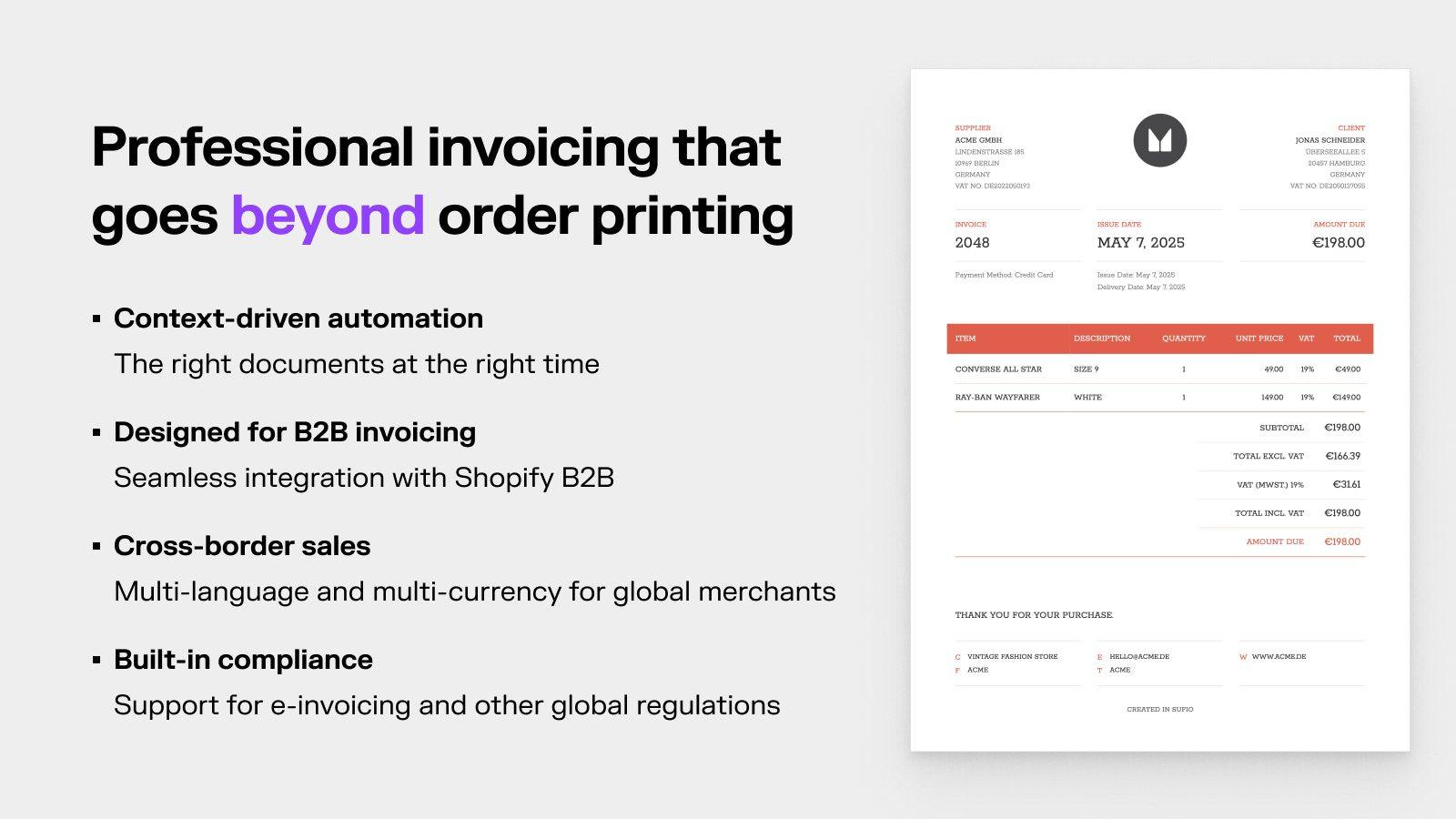
Sufio generates a VAT-compliant invoice for every Shopify order, automatically emails it to the customer (or holds it for B2B credit-term workflows), and stores invoice copies for the six-year HMRC retention requirement. UK VAT invoices have specific required fields: VAT registration number, VAT rate per line item, sub-totals and totals separately, your registered business address. Sufio templates handle these by default.
For B2B stores or any store with VAT-registered customers requesting invoices, Sufio is the simplest answer.
Pricing: From $7/month. Free trial available.
UK shoppers research more before purchase than US shoppers do, and the platforms they research on differ. Two apps move the needle here more than the generic top-of-list alternatives.
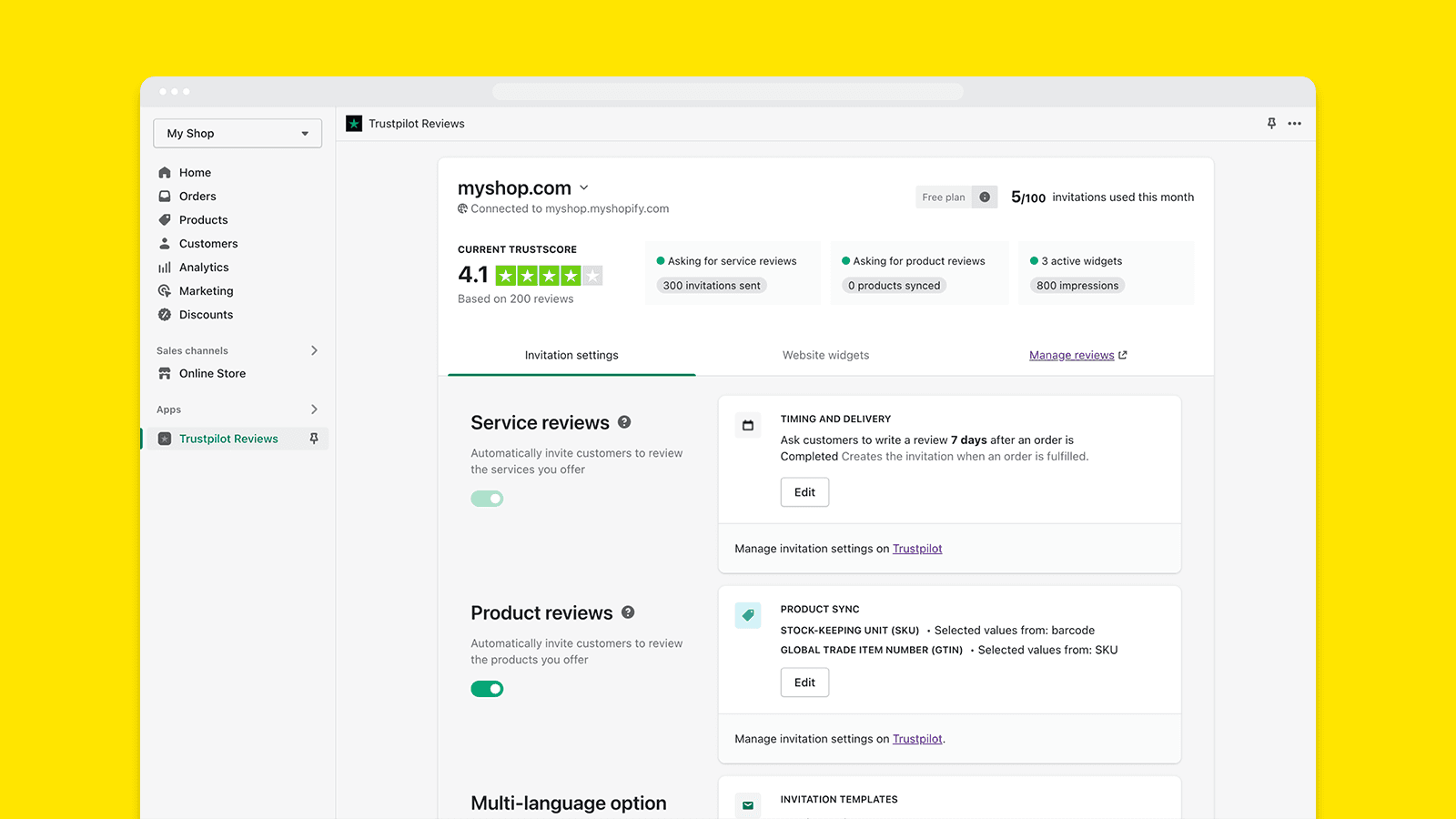
Trustpilot is the dominant review platform in the UK. It carries weight UK shoppers recognise: TrustScore appears in Google SERPs as a rich snippet, in Google Shopping ads as seller ratings, and on most UK comparison and review aggregator sites. The Shopify integration pulls verified buyer reviews automatically, displays the TrustScore widget on your site, and syncs reviews to Google Merchant Center for ad-eligibility.
Why not Judge.me or Yotpo: both are excellent for on-site reviews, and many UK stores run them in parallel with Trustpilot. But for the off-site trust signal that influences a first-time UK shopper deciding whether to buy from your store rather than a marketplace, Trustpilot has the brand recognition the other platforms do not.
Pricing: Trustpilot's plans start at $99/month. The Shopify app itself is free.
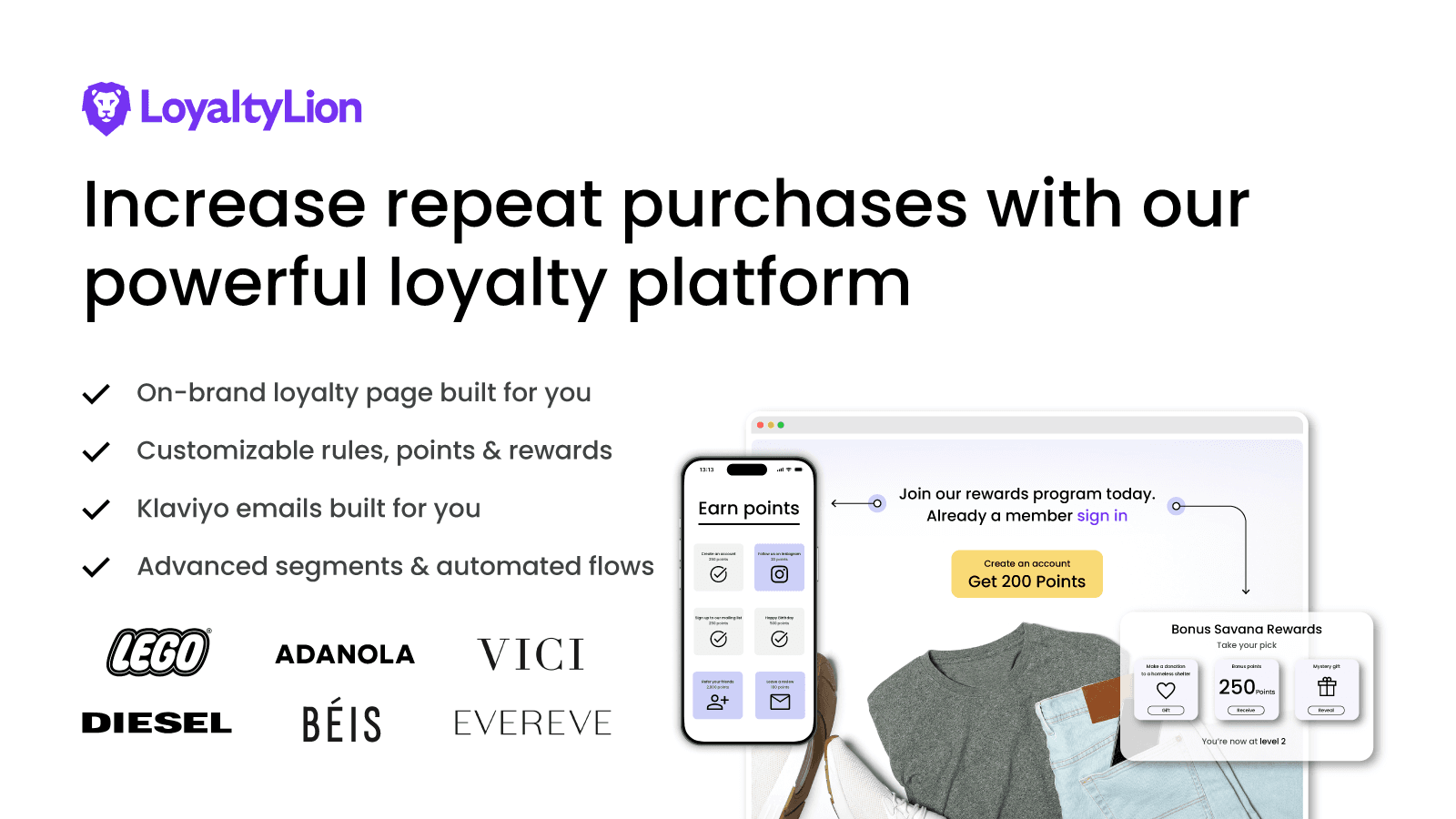
LoyaltyLion is a London-based loyalty and retention platform that integrates with Shopify, Klaviyo, Recharge, and most major UK ecommerce tools. It runs points programmes, VIP tiers, referral programmes, and analytics on the lifetime value of each tier. Why it matters for UK stores specifically: GDPR-compliant data handling is built in (point balances and customer data stay within EU/UK-hosted infrastructure on their Enterprise tier), and the LoyaltyLion team supports UK merchants in UK working hours.
Pricing: from £199/month for the Small plan, scaling by order volume. Free to install. Free trial available.
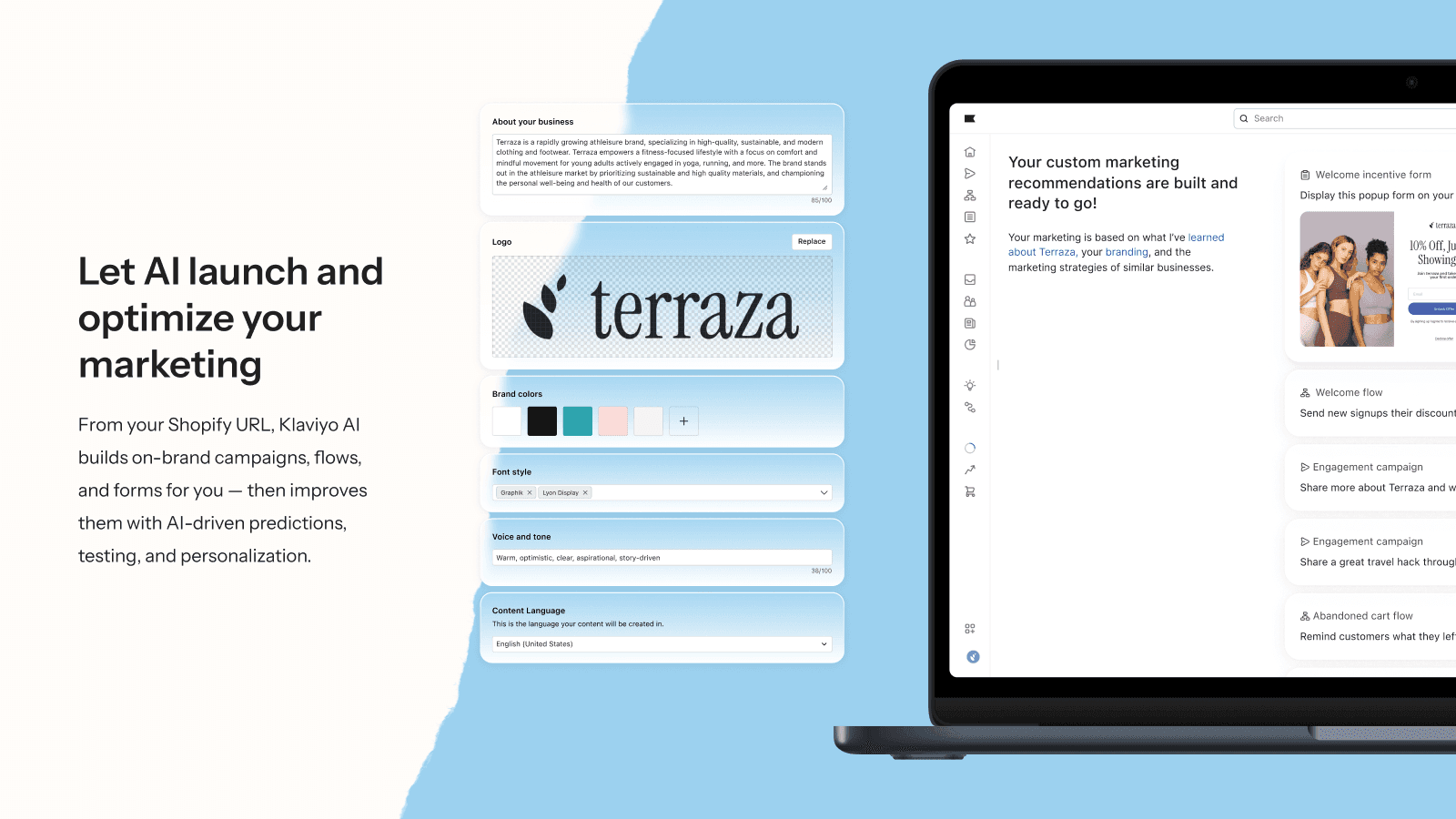
Klaviyo is not a UK-specific app, but it is the email and SMS platform that handles UK GDPR consent flows most cleanly out of the box. Soft opt-in for transactional triggers, explicit opt-in for marketing, granular consent records per channel, and proper handling of subject access and erasure requests. The cheaper alternatives (Mailchimp, Omnisend) work, but their default flows lean US-permissive in ways that can create UK GDPR exposure.
If your store is past £250K annual revenue, you almost certainly need Klaviyo. The flows that drive the most revenue (welcome series, abandoned browse, abandoned cart, post-purchase, win-back) all need the segmentation and behavioural-trigger logic Klaviyo offers and Mailchimp does not.
Pricing: starts free up to 250 contacts, scales with list size; a 10K-contact list typically runs around £150 to £250/month depending on send volume.
For UK B2B stores or stores running email-heavy retention programmes, Klaviyo plus LoyaltyLion plus Trustpilot is a common stack at the £500K to £5M revenue band. If you're building category and collection pages around this stack, our Shopify collection page SEO template covers the on-page structure that makes the discovery layer pull its weight.
The right stack at £200K is not the right stack at £5M. Three rough tiers:
Small UK store (under £500K annual revenue): Royal Mail app (free), Klarna (free, transaction fees), Clearpay (free, transaction fees), Sufio (£29/mo), Klaviyo (free up to 250 contacts), Trustpilot (free app with paid Trustpilot subscription optional). Total: roughly £30 to £80 per month in subscriptions plus transaction fees. Skip Mintsoft, Zonos, LoyaltyLion.
Mid-market UK store (£500K to £5M): Add Starshipit (~£30 to £100/mo) for multi-carrier shipping, LoyaltyLion (~£159/mo) for retention, and Klaviyo on a paid tier (~£150 to £300/mo). If shipping EU meaningfully, add Zonos (~£200/mo). Total: roughly £400 to £700 per month plus transaction fees.
Enterprise UK store (£5M+): Add Mintsoft or equivalent WMS for warehouse operations and an enterprise-tier Klaviyo plan. Total: typically £1,500 to £4,000 per month in subscriptions, but cost-justified by the team-hours and transaction-fee savings.
The mistake we see at every tier: stores installing the enterprise-tier stack at the small-store stage, paying for capability they won't use for two years. Add apps as you outgrow the simpler ones, not before. The same principle applies to content infrastructure.
Default "top Shopify apps" lists push tools UK-only stores genuinely don't need. Skipping them saves £100 to £500 per month and reduces stack complexity.
Skip Shop Pay Installments: it isn't available in the UK. Skip TaxJar, Avalara's US sales-tax product, or any tool built for US state-by-state sales tax. Skip USPS-focused rate shopping apps like Pirate Ship's Shopify integration. Skip Afterpay (US) if you already have Clearpay (it's the same company, but the UK product is Clearpay). Skip ShipBob or any US-based 3PL integration unless you actually have US fulfilment. Skip multi-state tax tools that solve a problem UK merchants don't have.
The savings add up. A UK store running a default "top 20 apps" stack typically pays £200 to £400 per month for capability it cannot use. Auditing the stack against UK-actual workflows is usually one of the first projects we run with a new Shopify Plus client during onboarding, alongside our SEO and GEO programme.
If you're considering a platform move into Shopify from BigCommerce, Magento, or WooCommerce, the app stack rebuild is a meaningful part of the work and worth scoping properly during discovery. Our Shopify Plus migration service covers that part of the project.
Q. Does Shopify Payments work for UK merchants? Yes. Shopify Payments is fully available in the UK, supports GBP as primary currency, integrates Shop Pay (the accelerated checkout), and applies UK card rates roughly equivalent to Stripe's published UK pricing. It does not offer Shop Pay Installments in the UK (BNPL), which is why Klarna and Clearpay apps are still essential.
Q. What's the difference between Clearpay and Afterpay on Shopify? They are the same company. Afterpay is the brand used in the US, Australia, New Zealand, and Canada. Clearpay is the UK brand. If you sell into the UK, install the Clearpay app rather than the Afterpay app, even though it's the same underlying service.
Q. Is Royal Mail's Shopify app the same as Click & Drop? The Royal Mail Shopify app pulls Shopify orders into Royal Mail's order management system. It uses the same Click & Drop infrastructure under the hood but installs as a Shopify app for the merchant. If you're already using Click & Drop standalone, the Shopify app version automates the order import step you'd otherwise do manually.
Q. How much does a typical UK Shopify app stack cost per month? Most UK Shopify stores spend £200 to £400 per month on apps in the £500K to £2M revenue band. Above £5M, that range moves to £1,500 to £4,000 per month as warehouse, tax, and loyalty platforms get added. Below £500K, a working stack can run under £100 per month in subscriptions.
Q. Which BNPL should I install first if I can only pick one? Klarna. It holds the largest UK BNPL share, has the strongest on-site messaging widget (which lifts conversion on PDPs even when shoppers don't end up using Pay in 3), and integrates cleanly with Shopify Payments. Add Clearpay second once you've measured the Klarna uplift, because the two together capture both segments of the UK BNPL audience.
UK Shopify merchants don't need 50 apps. They need 10 apps that match how UK shoppers buy, how UK carriers ship, how UK tax rules work, and how UK trust signals get earned. The default "top apps" lists fail this test because they were written from a US perspective for a US audience.
The stack above is what we recommend most often during Shopify Plus onboarding with UK clients. The exact mix shifts with category (fashion vs B2B vs subscription), AOV (under £40 changes the BNPL calculation), and growth stage (under £500K skips half the list). But the principle holds: build for the UK first, add the broader stack only when you've outgrown the simpler version.
If you're auditing your current Shopify app stack and want a UK-tuned review, that's one of the projects we run as part of platform migration and post-migration optimisation work.
Talk to our Shopify Plus team about a stack audit →